New data highlight on a new MLST scheme for tracking Giardia duodenalis assemblage B outbreaks
Published: 2026-08-27
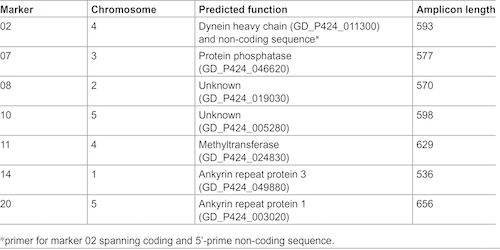
Our latest data highlight, “A New MLST Scheme for Tracking Giardia duodenalis Assemblage B Outbreaks”, presents the work of Klotz et al. (2026) . The study introduces a new high-resolution multi-locus sequence typing (MLST) scheme that improves the ability to distinguish genetically similar G. duodenalis assemblage B isolates, providing a valuable tool for outbreak investigations and molecular epidemiology.
G. duodenalis is one of the most common causes of parasitic gastrointestinal disease worldwide. However, existing typing methods often lack the resolution needed to determine whether infections are linked or to identify potential transmission routes. To address this, Klotz et al. (2026) developed a seven-marker MLST scheme using comparative analysis of 18 whole genomes and validated it across 146 clinical and animal samples. The approach successfully generated complete typing results for 109 samples, enabling detailed comparison of outbreak-associated and sporadic infections.
The study demonstrated that the new typing scheme reliably clustered epidemiologically linked cases, including samples from a documented waterborne outbreak and longitudinal patient samples, while clearly distinguishing them from unrelated sporadic cases. The analysis also revealed previously unrecognised population structure within assemblage B, identifying distinct groups of isolates with high or low allelic sequence heterogeneity (ASH), an important source of genetic variation in this parasite.
This work represents an important advance for molecular surveillance of giardiasis. By providing greater discriminatory power than conventional typing methods, the new MLST scheme has the potential to improve outbreak detection, source attribution, and epidemiological investigations of G. duodenalis infections. Researchers working in parasitology, infectious disease surveillance, molecular epidemiology, public health microbiology, and genomic typing will find this resource particularly valuable.
To find out more about the study, please read the data highlight.
If you are interested in having your work in the areas of pandemic preparedness and/or infectious disease promoted on the portal, please contact the portal team.