A new MLST scheme for tracking Giardia duodenalis assemblage B outbreaks
Published: 2026-08-27
Giardia duodenalis is a protozoan parasite that causes giardiasis, one of the most common intestinal parasitic diseases worldwide. Human infections are primarily caused by assemblages A and B, both of which have zoonotic potential. Molecular typing is essential for investigating outbreaks, identifying transmission routes, and tracing infection sources. However, current typing methods for assemblage B have limited discriminatory power because of its high genetic diversity and extensive allelic sequence heterogeneity (ASH), making epidemiological investigations particularly challenging.
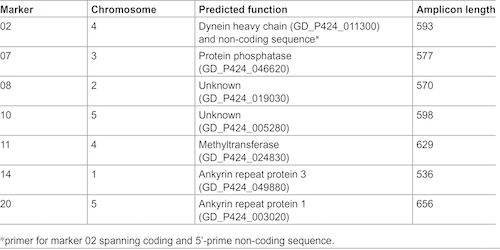
To improve molecular epidemiology of G. duodenalis assemblage B, Klotz et al. (2026) developed a high-resolution multilocus sequence typing (MLST) scheme based on whole-genome sequence data. The researchers analysed genomes from 18 axenically cultured assemblage B isolates to identify highly variable genomic regions suitable for molecular typing. From 42 candidate loci, 20 were selected for primer design, and following PCR performance testing, a final panel of seven genomic markers was incorporated into the MLST scheme. Unlike conventional typing methods, the new approach also incorporated analysis of allelic sequence heterogeneity (ASH), allowing heterozygous nucleotide positions to contribute to genotype assignment.
The analytical workflow of combined whole-genome comparisons, multiple sequence alignments, sliding-window analysis, and nested PCR helped to identify genomic regions with the highest discriminatory power. Candidate markers were evaluated using DNA from cultured isolates and clinical stool samples before selecting the seven-marker scheme. The chosen markers were distributed across different chromosomes to maximise genetic resolution while avoiding linkage between loci.
The final MLST scheme was applied to 146 assemblage B samples obtained from sporadic human infections, chronically infected patients, a previously described Italian waterborne outbreak, and a small number of animal isolates. Complete genotypes were successfully generated for 109 samples, corresponding to an overall success rate of approximately 75%. Across these isolates, the seven markers identified 652 variable nucleotide positions within a concatenated sequence length of 3,897 base pairs, providing substantially greater genetic resolution than conventional markers such as tpi, gdh, and bg.
Population analysis revealed that assemblage B consists of two major genetic groups, distinguished by their levels of allelic sequence heterogeneity. One group contained isolates with little or no ASH, whereas the second group exhibited consistently high ASH. Interestingly, this division did not completely correspond with the traditional BIII and BIV sub-assemblage classification, suggesting that current classification systems do not fully capture the genetic diversity of assemblage B. The study therefore provides new insight into the parasite’s complex population structure.
The new typing scheme also demonstrated its value for outbreak investigations. All 16 isolates from the Italian waterborne outbreak clustered together within the high-ASH group, clearly separating them from unrelated sporadic cases. Similarly, samples collected longitudinally from chronically infected patients generally clustered with their corresponding patient isolates, confirming epidemiological linkage. Only a small number of samples failed to cluster with related isolates, which the authors suggest may reflect mixed-strain infections or reinfections occurring over time. These findings indicate that the MLST approach can reliably distinguish outbreak-associated strains from unrelated infections.
The study also highlighted the importance of incorporating ASH into molecular typing. Rather than treating ambiguous nucleotide positions as sequencing artefacts, the authors incorporated them into genotype analyses using IUPAC nucleotide codes. This approach substantially improved the ability to distinguish closely related isolates and demonstrated that ASH itself provides valuable epidemiological information. However, ASH analysis remains computationally demanding and requires careful sequence interpretation, limiting its routine application in diagnostic laboratories.
Although the new MLST scheme represents a significant advance, the authors acknowledge several limitations. The parasite’s tetraploid genome, inability to routinely culture clinical isolates, and potential mixed infections complicate genotyping and may affect interpretation of epidemiological relationships. The current workflow also requires multiple PCR reactions and manual sequence analysis, making it resource-intensive. The authors suggest that future implementation of amplicon-based next-generation sequencing could automate ASH detection and further improve the speed and scalability of outbreak investigations.
By combining comparative genomics with a novel seven-locus MLST scheme, Klotz et al. (2026) provide a robust framework for high-resolution typing of G. duodenalis assemblage B. The study demonstrates that incorporating allelic sequence heterogeneity into molecular analyses substantially improves the ability to identify epidemiologically linked infections and characterise parasite population structure. These findings provide an important tool for outbreak investigations, source attribution, and future surveillance of one of the world’s most common intestinal parasites.
Data
The sequences generated in this study have been deposited in GenBank under accession numbers: PX676551 to PX677313.
Article
DOI: 10.1371/journal.pntd.0014528
Klotz, C., Winter, K., Schmid, M. W., Fuchs, S., Sannella, A. R., Chaudhry, U., Gomes, J., Ignatius, R., Aebischer, T., Betson, M., Troell, K., & Cacciò, S. M. (2026). High resolution multi-locus sequence typing scheme for Giardia duodenalis assemblage B outbreak and population analysis. PLOS Neglected Tropical Diseases, 20(7), e0014528.
Funding
This work was supported by the European Union’s Horizon 2020 Research and Innovation Programme (No 773830 to CK, MB, KT and SMC): One Health European Joint Programme, PARADISE project.