From bottlenecks to breakthroughs - decoding malaria transmission biology
Published: 2026-04-23
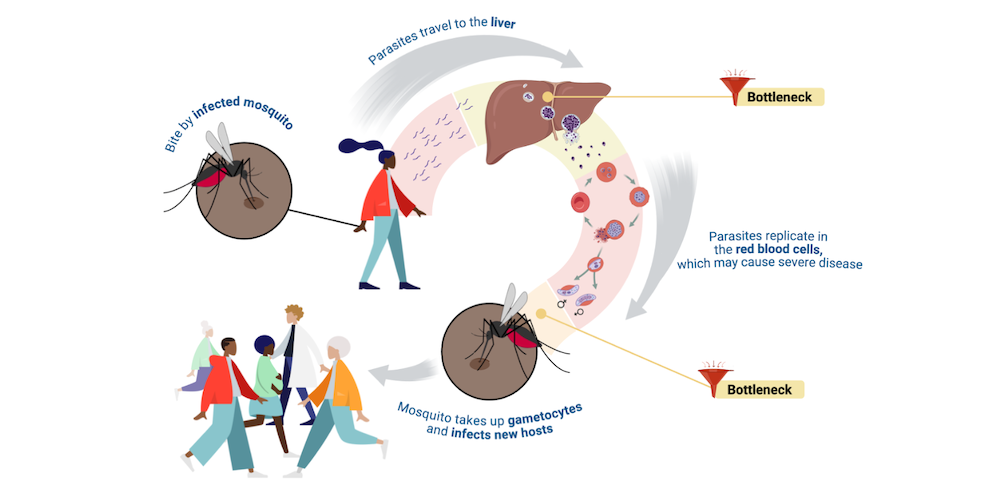
The latest editorial, written by researchers from the Ankarklev Lab, is entitled “Mind the Gap: How high-resolution omics is transforming our understanding of malaria transmission biology”. It explores how malaria remains a major global health challenge, and argues that advancing our understanding of parasite transmission requires moving beyond traditional approaches, and toward high-resolution, data-driven biology. This editorial was contributed and published in the honor of the World Malaria Day, it highlights the urgent need for innovative research to combat a disease that continues to affect millions globally.
This editorial highlights how malaria parasites (Plasmodium spp.) rely on complex host–vector interactions and must overcome key biological bottlenecks during transmission. The authors emphasise the importance of critical stages of liver infection and gametocyte development that have historically been difficult to study due to their transient and low-abundance nature. The authors demonstrate how emerging technologies such as single-cell and spatial transcriptomics are now enabling researchers to investigate these stages in unprecedented detail, uncovering new insights into parasite development, host immune responses, and transmission dynamics.
A central focus of the work is the Ankarklev Lab’s contribution to this field, including mapping gametocyte differentiation at single-cell resolution (data available in a Shiny app), and characterising host–parasite interactions within the liver using spatial omics. These approaches reveal previously hidden biological processes, such as sex-specific developmental pathways in parasites and localised immune responses in infected liver tissue; reshaping our understanding of malaria biology.
Ultimately, the editorial underscores the importance of integrating high-resolution omics with data-driven analytical tools to address remaining knowledge gaps. By building accessible resources and fostering collaborative research, the Ankarklev Lab aims to support the development of next-generation interventions targeting malaria transmission.
If you are interested in writing an editorial for the portal, please contact us.