New data highlight on a new digital approach for identifying rare antibiotic-resistant bacterial subpopulations
Published: 2026-06-29
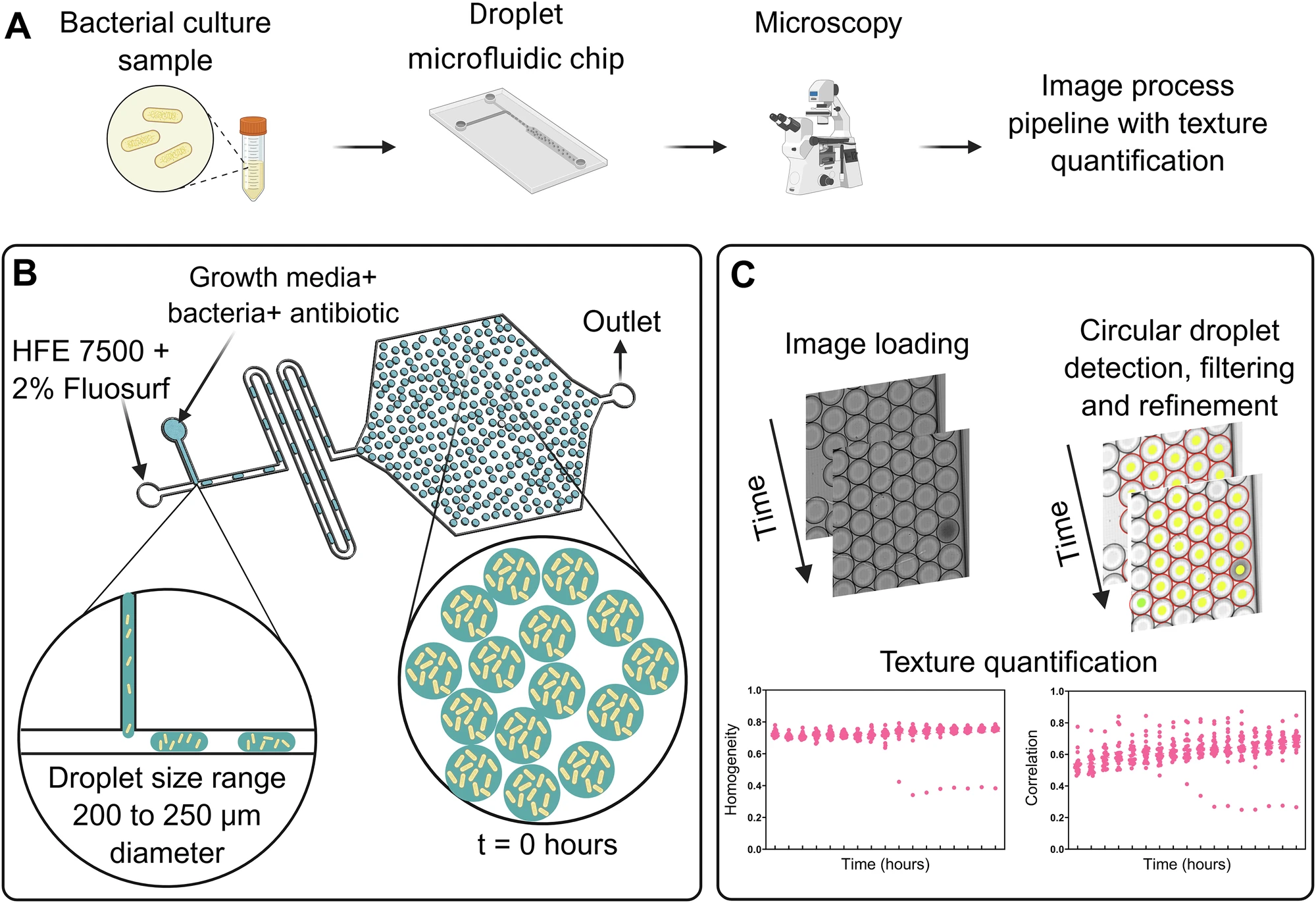
Our latest data highlight,“Rapid microfluidic approach to detect hidden antibiotic resistance in bloodstream infections”, presents the work of Agnihotri et al. (2026). The study introduces a novel digital phenotyping platform that combines droplet microfluidics with automated image texture analysis to detect bacterial heteroresistance (HR)—a form of antibiotic resistance that often escapes conventional diagnostic testing.
Agnihotri et al. (2026) developed a high-throughput approach capable of identifying rare resistant bacterial subpopulations at frequencies as low as one resistant cell among one million susceptible cells. The method was successfully applied to clinically important Gram-negative and Gram-positive pathogens, including Klebsiella pneumoniae, Pseudomonas aeruginosa, Acinetobacter baumannii, and Staphylococcus aureus isolated from bloodstream infections. By integrating droplet-based bacterial culture with computational image analysis, the platform detected heteroresistant subpopulations within 12–30 hours, substantially faster than the current gold-standard population analysis profile (PAP) test.
The study demonstrated that image texture features could accurately distinguish droplets containing resistant bacterial growth from those without growth, enabling sensitive and automated detection of heteroresistance across multiple pathogen species. Importantly, the results closely matched those obtained using traditional PAP testing while reducing hands-on laboratory time and improving scalability.
This work provides an important advancement for antimicrobial resistance diagnostics and digital medicine. By enabling earlier and more reliable detection of rare resistant subpopulations, the platform has the potential to support more targeted antibiotic therapy and improve clinical decision-making in severe infections. Researchers working in antimicrobial resistance, microfluidics, clinical microbiology, diagnostic development, and infectious diseases will find this resource particularly valuable.
To find out more about the study, please read the latest data highlight.
If you are interested in having your work in the areas of antimicrobial resistance, infectious diseases, or pandemic preparedness promoted, please contact us.